

What if the anxieties, talents, or inexplicable memories you experience are echoes from a life you once lived? In the realm of ancient Indian wisdom, past life regression isn’t a New Age concept—it was explored millennia ago by the legendary sage Patanjali, the father of yoga. Patanjali called it prati-prasava, a term that literally means “reverse birthing.” But what does this mean, and how deep do the roots of this knowledge go?
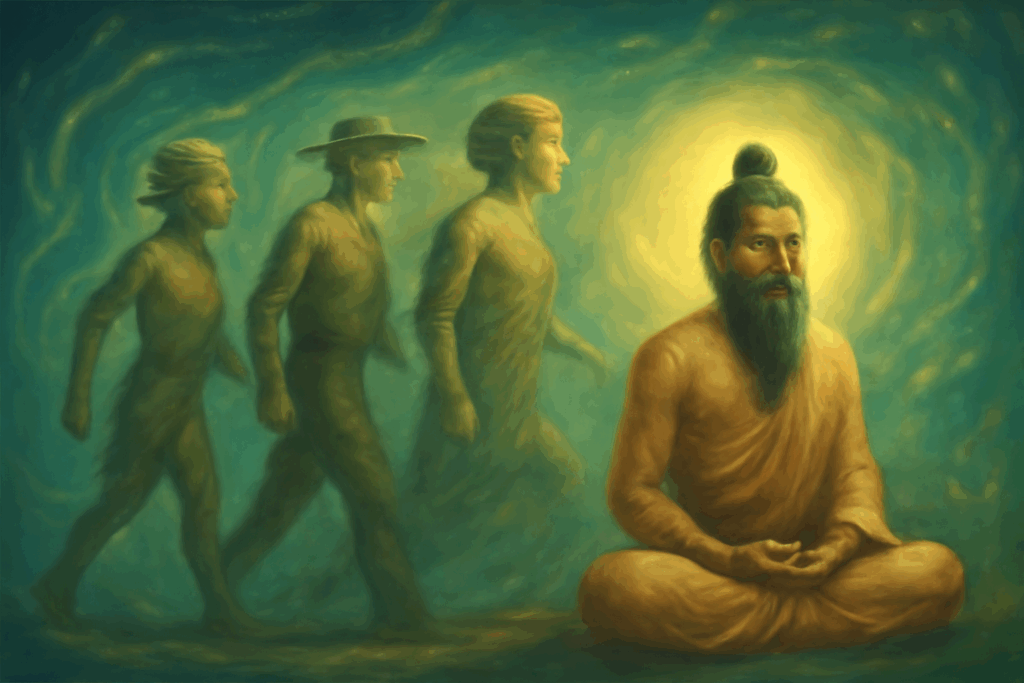
Prati-Prasava: The Yogic Journey into Past Lives
Patanjali’s Yoga Sutras are revered for mapping the soul’s journey toward enlightenment. In Sutra 3.18, he boldly states that through samyama (a powerful three-fold meditative focus) on the mind’s deep impressions (samskaras), one can uncover the stories of past incarnations. This isn’t just philosophy—it’s a spiritual technology, a process where consciousness “rewinds” the movie reel of our existence.
By practicing prati-prasava, the yogi retraces the steps of their present life, peeling away layers of memory until touching the core where this life’s patterns began. With even deeper introspection, advanced yogis can journey past the moment of this birth—into the theater of previous lives. Here, the aim isn’t mere curiosity, but profound healing and wisdom: to understand why certain emotions, fears, or gifts pervade your present life and, ultimately, to dissolve the karmic knots that bind you to the cycle of suffering.
Imagine recognizing a recurring phobia as a scar from a past existence or grasping why certain people feel inexplicably familiar. Patanjali’s tradition views this not as mysticism, but as actionable self-knowledge.
Going Beyond: The Scriptural Testimony to Past Lives
But Patanjali’s insights don’t stand alone. The fabric of Indian spirituality is rich with references to the journey through multiple births:
- Upanishads: These philosophical masterpieces vividly describe how the soul (atman) migrates from one body to another, carrying forward the baggage of karma, hopes, and experiences.
- Bhagavad Gita: Here, Krishna reveals to Arjuna the timeless nature of the soul and how yogis can access knowledge from earlier lives—wisdom vital for spiritual growth.
- Puranas: With their captivating tales of kings, saints, and sinners, the Puranas paint dramatic stories where characters recall and resolve karmic debts from previous incarnations.
- Manusmriti: This code of dharma intricately links every thought and action to the shape our future births will take, emphasizing the immortality of the soul’s journey.
- Mahabharata: Epic tales like Amba’s rebirth as Shikhandi show how unresolved desires manifest across lifetimes—a motif found throughout the epic.
- Jain and Buddhist Scriptures: Both traditions not only accept rebirth but describe spiritual practices where advanced monks recall a long chain of past lives, using such insights to propel themselves (and humanity) towards liberation.
The Takeaway: Why This Ancient Wisdom Matters Today
In our rapidly modernizing world, the idea that our present struggles or strengths might have deep, invisible roots feels both intriguing and empowering. Patanjali’s concept of prati-prasava is more than mystical lore—it’s an invitation to explore the depths of your own consciousness, to transform not just your mind, but your destiny.